What a rate cut actually does to your loan payment
Translating the Fed headlines into the only question that matters at your desk.
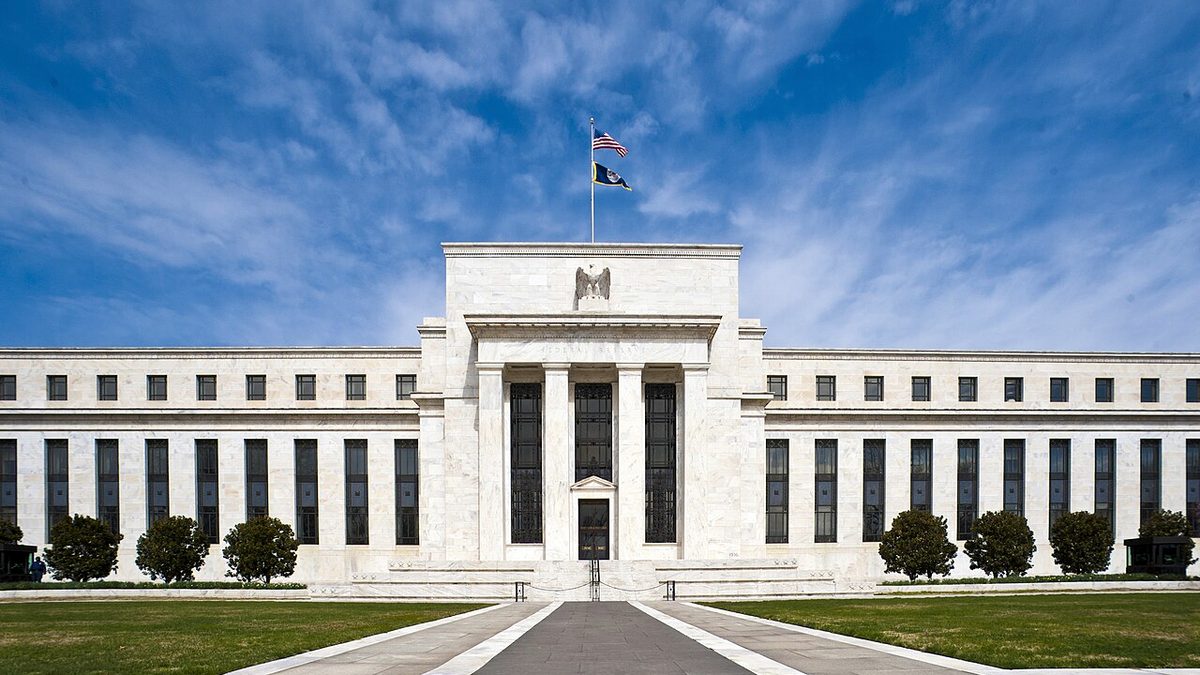
Every few weeks, the financial press holds its breath over a quarter of a percent. Cut, hold, hike. The coverage treats it like weather. And for most owner-run businesses, that’s exactly how it feels: something happening far away, to other people, in a language built to keep you from asking questions.
Here’s the plain version. It’s shorter than you’d think, and it ends at your loan payment.
The chain from Washington to your Tuesday
The Federal Reserve sets a target for the federal funds rate, what banks charge each other to borrow overnight. You will never borrow at that rate. But a great deal of what you do borrow is chained to it.
When the Fed moves, the prime rate (the benchmark banks quote their best customers) typically moves in step, and prime has long sat about three percentage points above the Fed’s target. Business lines of credit, many SBA loans, and most variable-rate business debt are priced as “prime plus something,” or off a market benchmark called SOFR that rides the same tide.
So the chain is short: Fed target → prime (or SOFR) → your rate → your payment. Fixed-rate debt sleeps through all of it. Variable-rate debt feels every move, in both directions.
The arithmetic, in plain numbers
Say you carry a $250,000 balance on a line of credit priced at prime + 1.5. If the Fed cuts by half a point and prime follows, your rate drops by that same half point. On that balance, that’s about $1,250 a year in interest you stop paying, roughly $104 a month, for doing nothing at all.
It runs the other way too, which is why owners who lived through the sharp hiking years still wince at the memory. A business carrying variable debt is, whether it meant to be or not, making a small bet on monetary policy every single month.
The bigger effect isn’t the drip. It’s the refinancing window. Debt taken on near the top of a rate cycle may deserve a fresh look once rates settle lower. Even a single point of improvement on a $250,000 term loan is $2,500 a year before you count what faster amortization does for you down the line.
Five lines in your loan documents worth reading this week
- The index. What benchmark is your rate tied to: prime, SOFR, something else? Or is it fixed?
- The margin. The “plus what.” Prime + 1.5 and prime + 4 are very different loans wearing the same jacket.
- The floor. Many variable loans have a minimum rate. If yours does, a cut may not reach you until the benchmark falls below it, which is worth knowing before you celebrate a headline.
- The reset frequency. Some loans adjust the day the benchmark moves; others monthly or quarterly.
- The prepayment terms. If a refinancing window opens, this line decides how expensive the doorway is.
You don’t need to predict the Fed. You need to know, ahead of time, exactly what each move does to your Tuesday.
What we do with this in an engagement
The first thing a Valoris debt review produces is one page: every balance you owe, its rate, its index, its margin, its floor, and its term, side by side, probably for the first time. From there the moves tend to name themselves: which debts float and shouldn’t, which are fixed at a rate the market has left behind, where a consolidation or renegotiation window is open, and what each option is worth in dollars per year.
Our homepage runs a live Macro Desk tracking rate and policy news for exactly this reason. Not because the headlines matter, but because a handful of them occasionally do, and it’s our job to notice which.
Talk it through with us.
The first consultation is free: a plain-English look at your actual numbers, and an honest read on whether there’s something worth doing together.
Book a free consultation Try the savings calculator →